U.S. Democrats level serious accusations against Nvidia’s CEO for violating export laws regarding chips to China
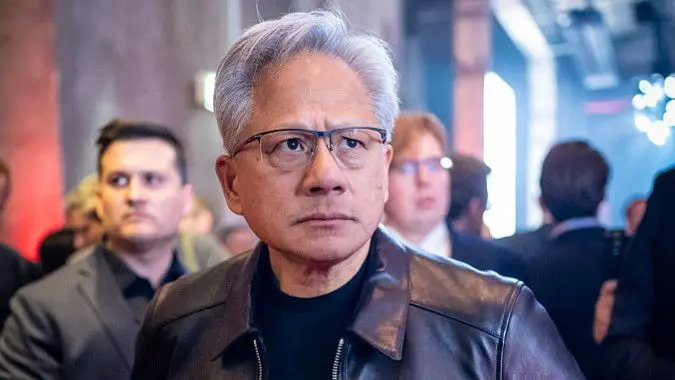
The leader of the Democrats in the U.S. Senate is calling for an investigation into Jensen Huang, comparing the transfer of advanced technology to China to the sale of rocket engines to the Soviet Union during the Cold War. Nvidia's CEO is expected to testify before Congress on December 3.
The leader of the Democratic minority in the U.S. Senate, Chuck Schumer, has accused Nvidia's CEO, Jensen Huang, of violating U.S. laws that restrict the export of advanced technology to China, The Guardian reports.
In a public statement on November 24, Schumer claimed that Huang had sent advanced chips to China, in violation of U.S. restrictions. He compared this action to the sale of rocket engines to the Soviet Union during the space race.
Schumer described the situation as a serious failure of the Trump administration to enforce export controls.
Huang's return after Trump's intervention
The controversy comes just one day after Nvidia's board of directors decided to reinstate Jensen Huang as president and CEO on November 23.
The decision was made after President Donald Trump admitted that he had intervened directly and indirectly with board members to secure his reinstatement.
The Board stated that it had received information from high levels of the U.S. government and that, based on this information, it saw no national security risk from Huang's return.
However, Trump's intervention has sparked reactions from both political camps in Washington. Lawmakers want to know what information was provided to the board and which U.S. officials assured them that there was no threat to national security.
Suspicions of chip transfers to China
Another element of the investigation concerns Alice Huang, an executive at the tech company Megaspeed, who is suspected by U.S. authorities of having ties to Chinese intelligence services.
According to the allegations under investigation, Nvidia's advanced chips may have been transferred to China through companies operating data centers, bypassing export restrictions.
These are allegations and suspicions that require verification by the authorities. So far, they do not constitute a violation personally proven by Jensen Huang.
Congress seeks testimony from Nvidia's CEO
Huang is expected to appear on December 3 for a public hearing before the Senate Banking Committee, where he will be questioned about chip exports and national security concerns.
He is also expected to attend a closed-door briefing on December 1 before three House committees.
Democratic Senator Elizabeth Warren has called for strengthening bipartisan legislation to control exports of advanced technology, while Republican Tom Cotton has supported the passage of the Chip Security Act, which aims to track artificial intelligence chips and identify cases where they end up with prohibited users.
Other Republican senators have also called for greater oversight of Nvidia's activities and the U.S. administration's role in the matter.
The clash is thus taking on dimensions beyond a single company, putting American control over artificial intelligence technology and strategic competition with China at the center of the debate.