Rutte pledges that NATO will defend itself against threats in space following reports of a Russian nuclear satellite
NATO Secretary General Mark Rutte has stated that the Alliance will defend itself against any threat in space, following reports that Russia is preparing to launch a satellite equipped with nuclear weapons.
According to German media reports, NATO member states have exchanged intelligence this month about a possible satellite launch within the next 60 days. However, it has not been disclosed which country prepared these reports.
When asked about these claims, Rutte said that NATO would guarantee the defense of every part of the Alliance's territory, including security in space, the BBC reports.
“We will always make sure to defend every inch of NATO territory. This also includes guaranteeing our security in terms of space,” Rutte stated.
Kremlin spokesperson Dmitry Peskov said he had not seen the latest reports, but dismissed information based on anonymous sources as unreliable.
Meanwhile, the Russian Embassy in Berlin has dismissed the allegations, calling them unfounded and part of a propaganda campaign.
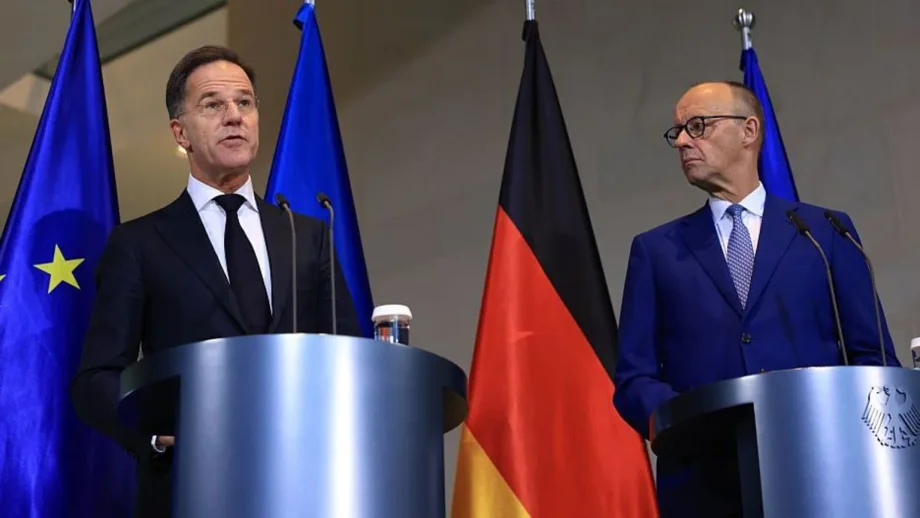
During a press conference in Berlin, Rutte said that NATO has several options for responding to potential threats.
“When it comes to the military domain, we constantly assess our prevention and defense measures, and update them when necessary,” he said.
According to reports by German broadcasters NDR and WDR, as well as the newspaper “Süddeutsche Zeitung,” which cite anonymous German military and intelligence sources, the Russian satellite is named “Sputnik-S” and is equipped with a nuclear payload.
According to these reports, the satellite could be used to disrupt or destroy other satellites, including those that are important for communication and surveillance.
German Chancellor Friedrich Merz, who was present at the conference alongside Rutte, neither confirmed nor denied the reports about Russia's plans. However, he said that they indicate the level of escalation that Russia is willing to pursue.
“Reports that Russia is planning to deploy nuclear weapons in space are not new, but they remain just as shocking,” Merz said.
A German government spokesperson had also previously stated that the reports were being taken very seriously, but warned against creating undue concern about still-hypothetical risks.
Meanwhile, the head of the European Space Agency, Josef Aschbacher, described the deployment of nuclear weapons in space as "the worst-case scenario."
Russia is a signatory to the 1967 Outer Space Treaty, which prohibits the placement of weapons of mass destruction in Earth's orbit.
However, some countries, including the United States and China, have developed or are considering other military capabilities in space, such as systems for targeting enemy satellites. These satellites are of particular importance for military communications, surveillance, and navigation.
In 2024, the U.S. claimed that Russia was developing a space-based anti-satellite weapon equipped with a nuclear warhead. Moscow denied these accusations.
“Our stance is clear and transparent. We have always been categorically against the deployment of nuclear weapons in space, and we continue to be against it,” Russian President Vladimir Putin stated at the time.
In September, the Secretary of the U.S. Air Force, Troy Meink, stated that his country has weapons for controlling space in Earth's orbit, but he did not provide details about them.
Following this statement, Kremlin spokesman Peskov said that space should remain free of any kind of weapons.